
Saros vs Returnal: Progression After Death
Compare Saros and Returnal's progression after death, including permanent upgrades and Second Chance, without assuming either game removes the challenge.
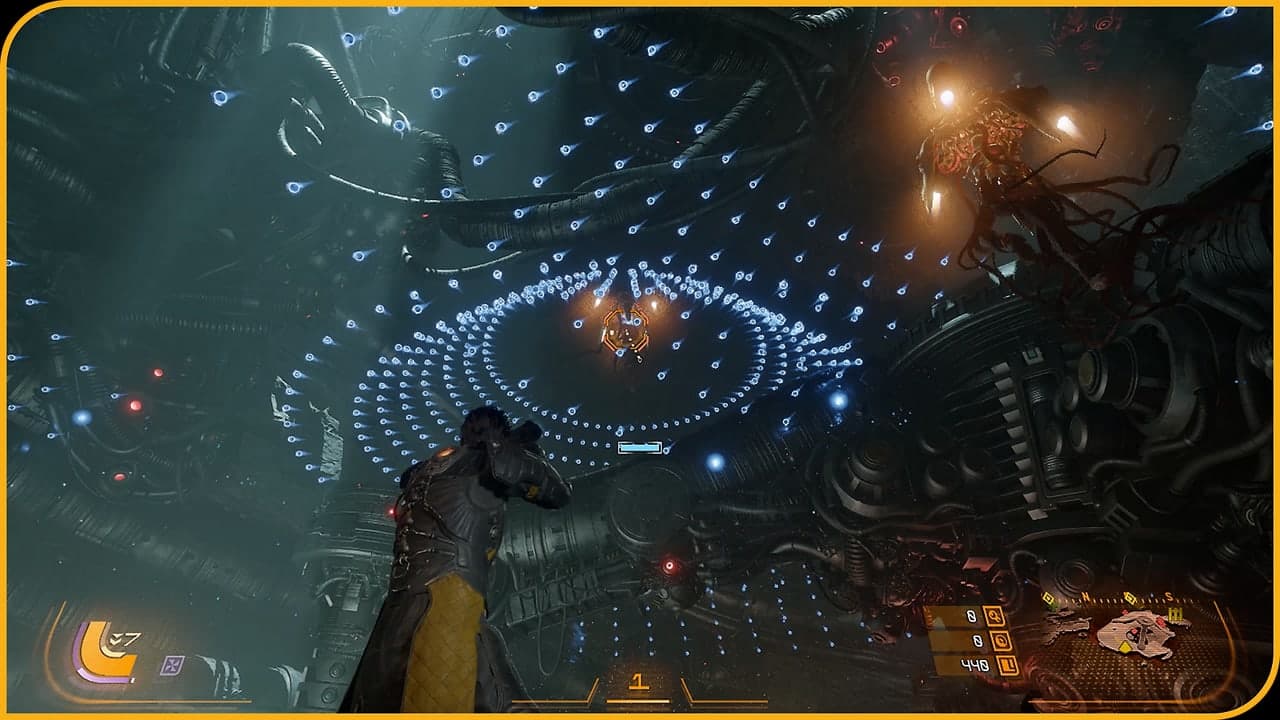
01 / Saros changes the cost of failure, not the need to learn
Saros changes the cost of failure, not the need to learn
Saros gives permanent loadout progression a more explicit role than Returnal. Housemarque highlights resources, weapons and suit upgrades that help Arjun return stronger after a failed run. Its Second Chance ability, once discovered, also revives him on his first death.
That is a useful distinction if losing a strong run was what stopped you enjoying Returnal. It is not evidence that Saros becomes a relaxed shooter. Reading attacks, positioning and deciding when to defend remain part of the action.
02 / Compare what survives the setback
Compare what survives the setback
Permanent progression
Saros: chosen loadout upgrades. Returnal: some persistent unlocks.Housemarque describes Saros as an expansion of this idea. Returnal is not a game where literally everything disappears after death.
The failed run
Both retain a repeating-run structure.Returnal's developer overview says most acquired abilities and items are lost. Saros adds permanent strengthening without promising to preserve every temporary advantage.
A second attempt within the run
Saros has the discoverable Second Chance ability.Treat it as a specific recovery mechanic, not unlimited revives or proof that all defeats are consequence-free.
Combat expectations
Both require engagement with projectile-heavy action.Saros' shield and power-weapon interaction changes how you respond. It does not make learning movement and enemy patterns irrelevant.
03 / Returnal already has progress worth recognising
Returnal already has progress worth recognising
Housemarque's Returnal combat overview explicitly separates things lost during a cycle from elements that persist. It describes permanent additions to the available loot pool, while PlayStation's current game page also documents retained weapon-trait progress and other unlocks in its co-op explanation.
The fair comparison is therefore not 'Returnal wastes every run; Saros saves everything'. Ask what kind of progress you notice and value. Some players enjoy becoming more knowledgeable even when a particular loadout disappears. Others need a visible upgrade decision to feel that an unsuccessful evening moved them forward.
Saros' more direct emphasis on permanent strengthening is especially relevant to that second preference. This is an interpretation of the documented systems, not a claim that one design will feel better to every player.
04 / Identify the part of Returnal that frustrated you
Identify the part of Returnal that frustrated you
- You liked the fighting but disliked losing a good setupLook closely at Saros' permanent loadout progression. It addresses continuity between runs more directly than a promise of simply adding more weapons.
- You disliked dodging and tracking projectile patternsProgression alone may not solve the mismatch. Judge the moment-to-moment fighting separately from what an upgrade tree preserves.
- You enjoyed adapting to an uncertain runMore permanent control is not automatically an improvement for you. Decide whether you want additional planning between attempts or prefer discovery within them.
- You need a particular accessibility optionVerify that the option is released, not merely announced. The Saros page describes Zenith additions while also placing that update later in 2026; do not buy for an unverified future setting.
05 / Use progression as one decision factor
Use progression as one decision factor
Consider Saros if you still want demanding sci-fi action but need a clearer connection between a failed run and the next attempt. If the combat itself was the obstacle, look beyond the upgrade system before deciding.
A helpful way to assess any run-based game is to name what made the last session worthwhile: a permanent unlock, a better understanding of an enemy, or simply an exciting encounter. When none of those feels rewarding to you, a different progression model may help, but a different kind of game may help more.